Fujifilm X-T3 - Cinematic 3D Product Visualisation
Project Overview
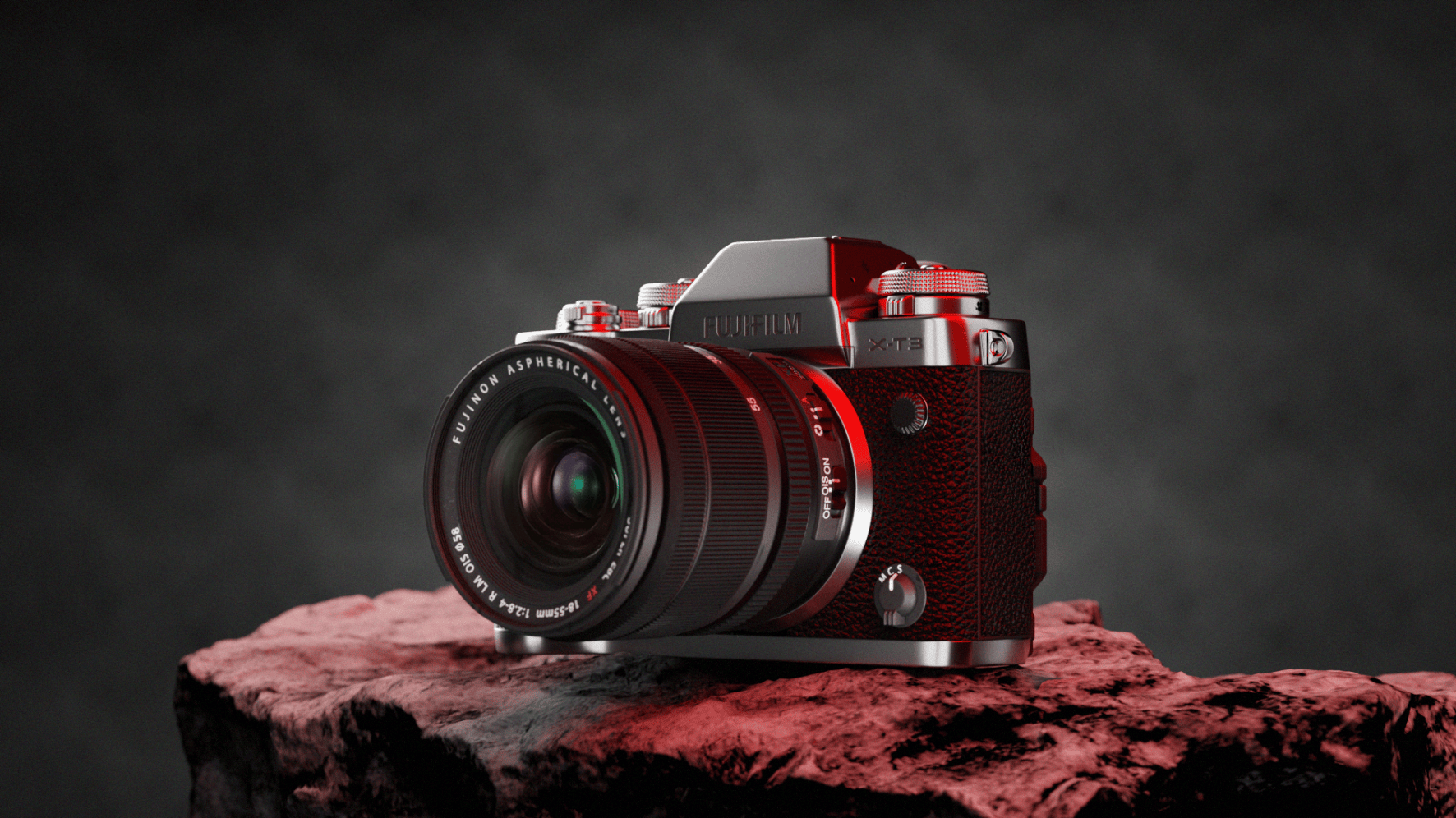
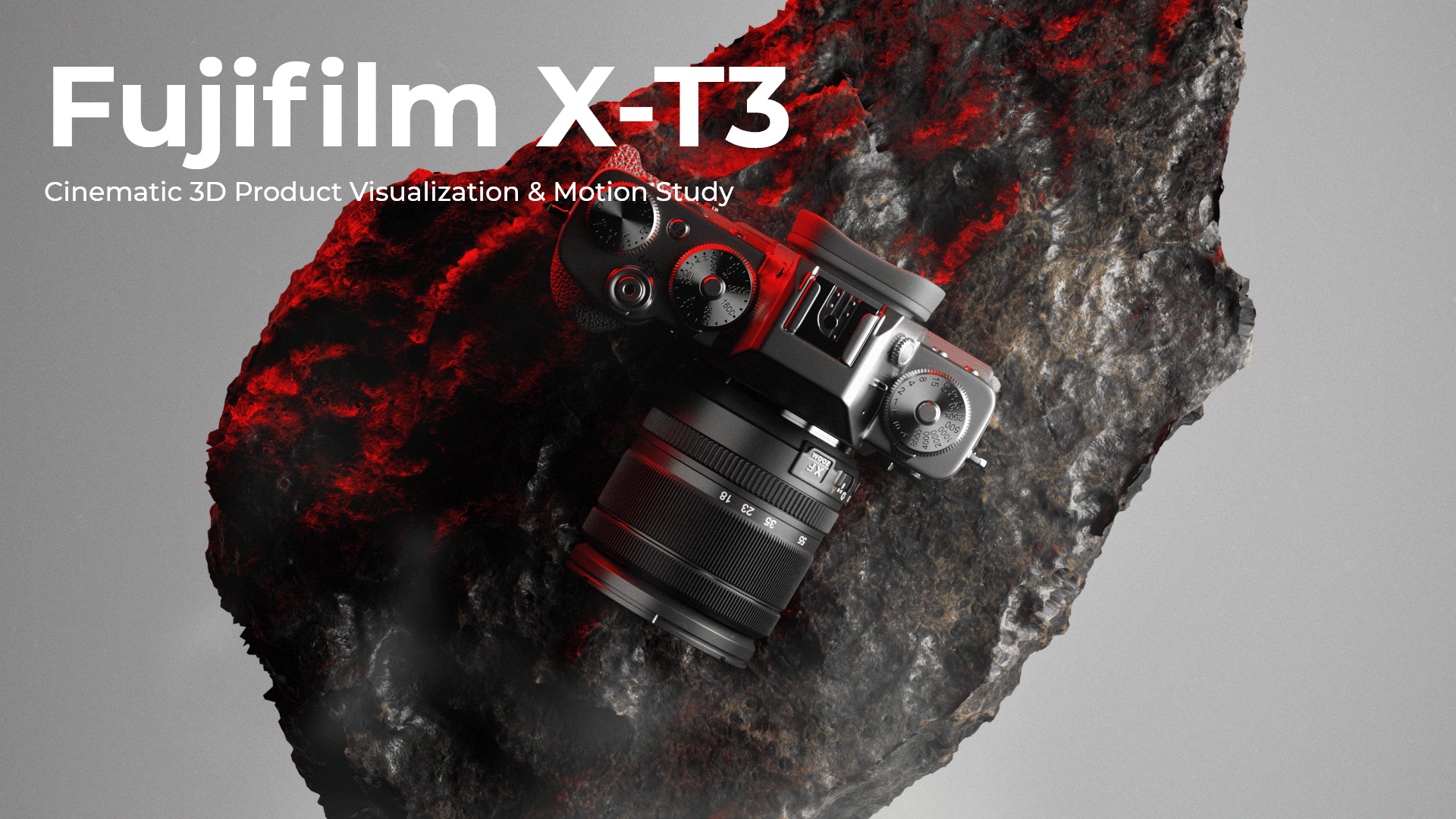
This project explores a cinematic approach to 3D product visualisation through material generation, precision assembly animation, and premium lighting design. The goal was to present the Fujifilm X-T3 as a high-end engineered product suitable for launch campaigns, social media, and brand storytelling.
The Challenge
The Challenge
The Fujifilm X-T3 combines complex materials, mechanical depth, and strong industrial design. Therefore, the challenge was to communicate this craftsmanship without making the visuals feel technical or overwhelming.
The final result needed to feel like a premium product campaign, not a technical demo.
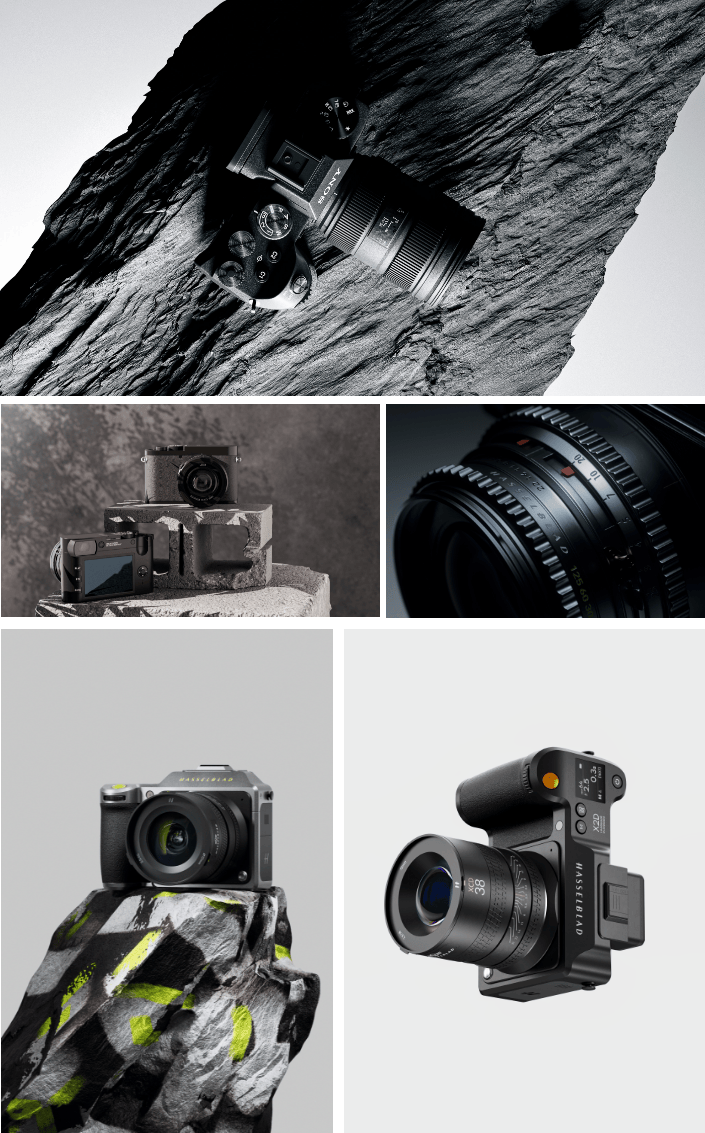
Visual Direction & References
The visual direction focused on:
• High-contrast lighting
• Red accent highlights
• Dark, cinematic environments
• Strong silhouettes
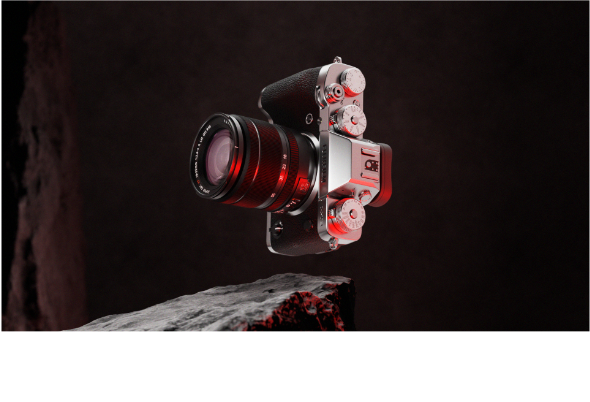
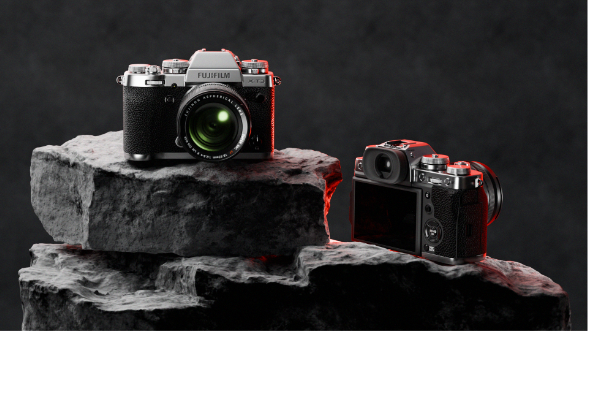
• Floating and pedestal compositions
Two reference sets were used:
Static angle references
Animation camera angle references
These guided:
• Composition
• Lighting style
• Motion flow
• Product framing
Static Image Workflow
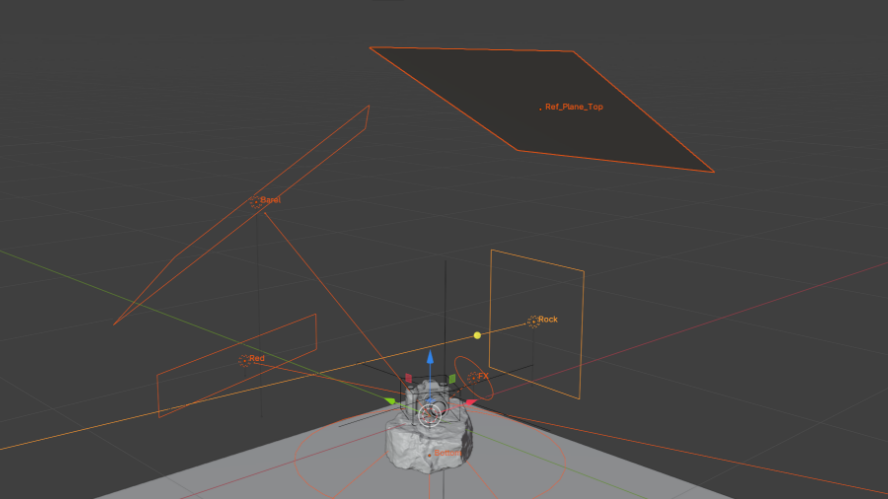
From Light Tests to Final Renders
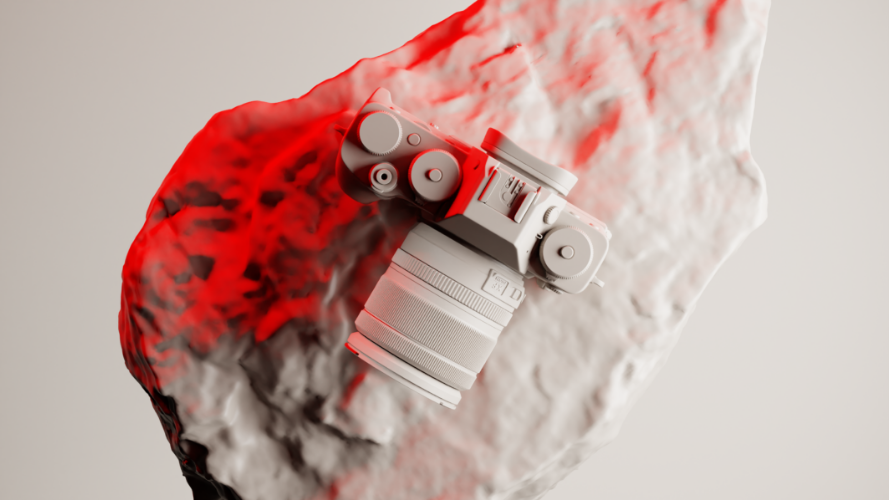
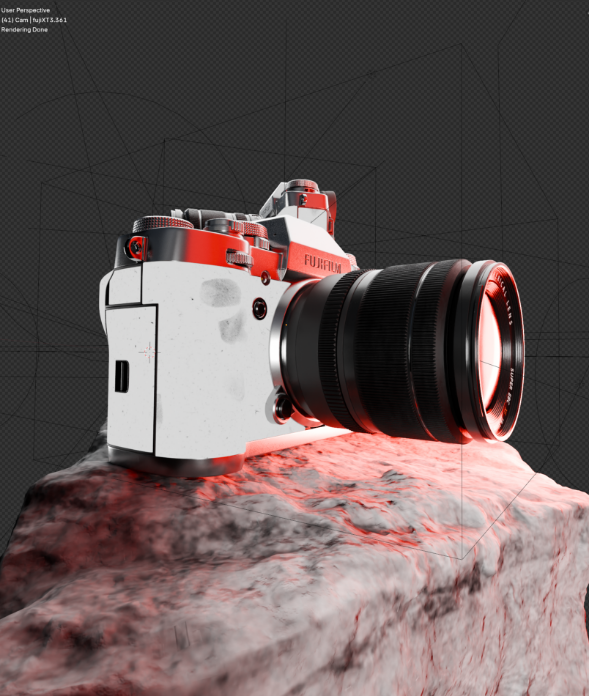
Before creating the final marketing visuals, lighting and composition were tested using simplified clay renders. This step helped refine the mood and establish the product silhouette early in the process.
This helped define:
• Edge highlights
• Shadow depth
• Product silhouette
• Mood consistency
Early lighting tests to define mood and product silhouette.
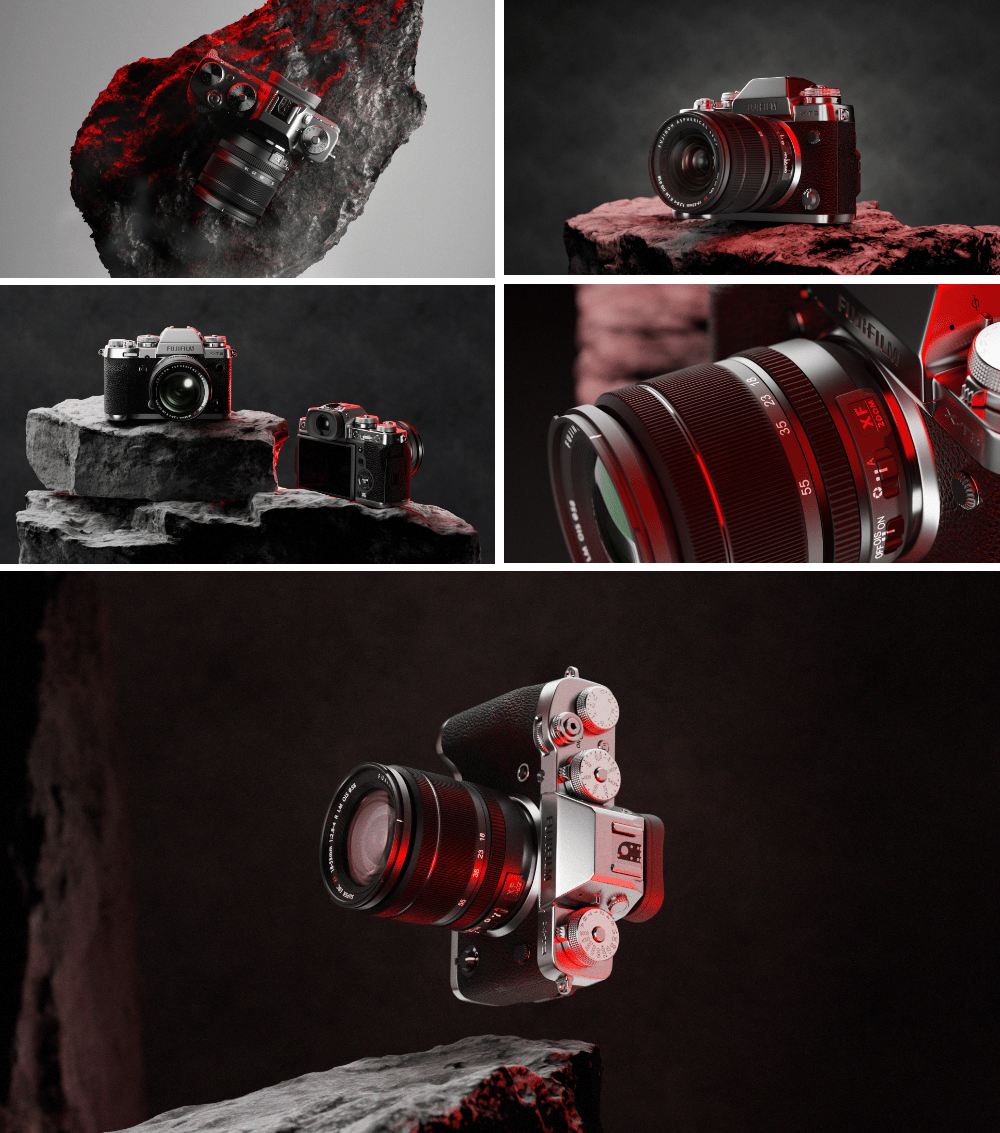
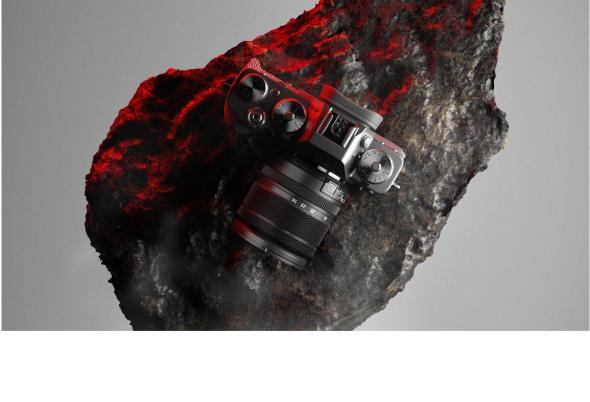
Final Static Renders
Cinematic Product Presentation
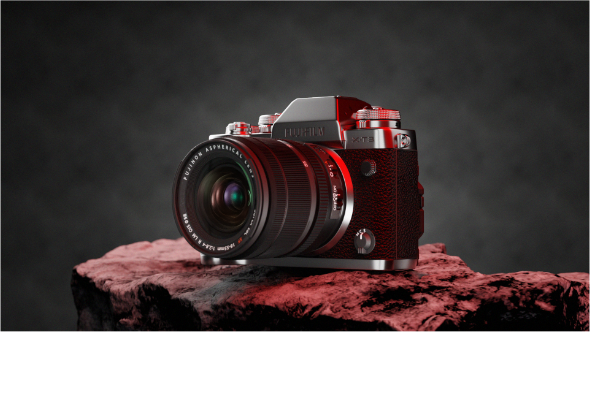
The final statics were designed for:
• Social media
• Website hero sections
• Product pages
• Campaign visuals
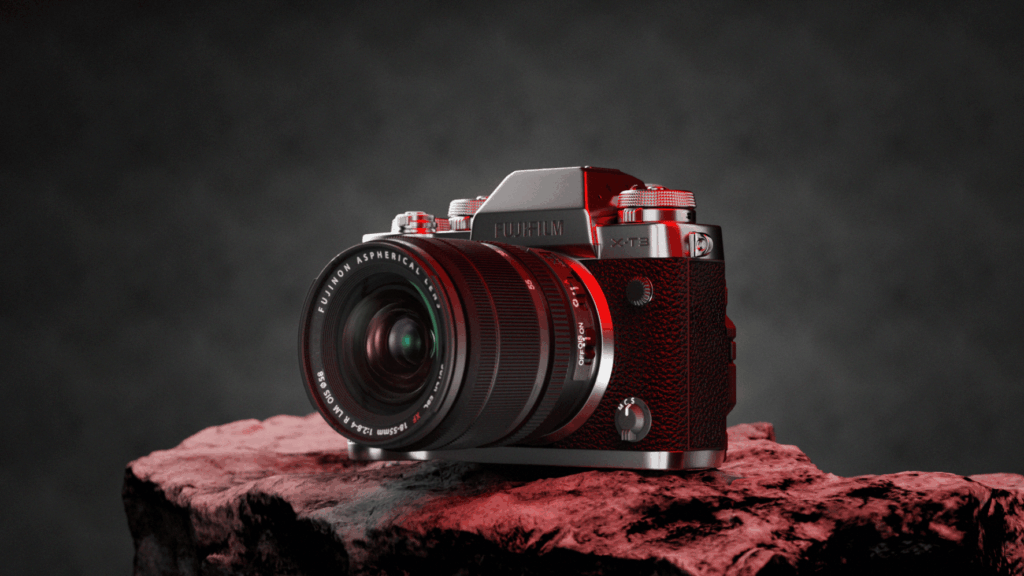
Each shot focused on:
• Material realism
• Dramatic lighting
• Clear product form
• Premium atmosphere
Animation Overview
Animation Overview
The animation follows a clear visual journey:
1. Material generation
2. Camera assembly
3. USP feature presentation
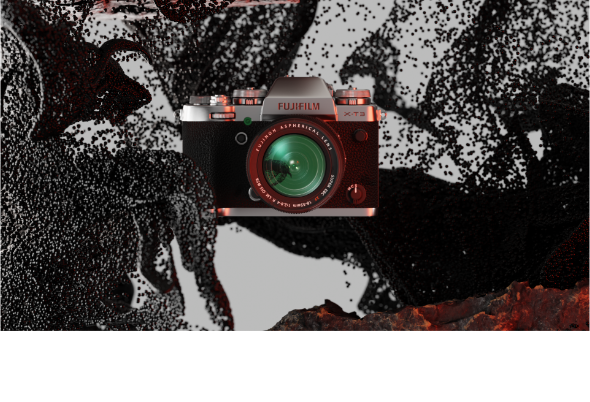
4. Final particle reveal
Each stage was designed to feel cinematic and aligned with brand storytelling.
Phase 1
Material Generation
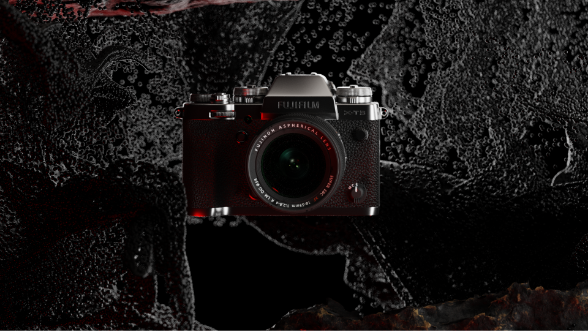
The animation begins with abstract material formation.
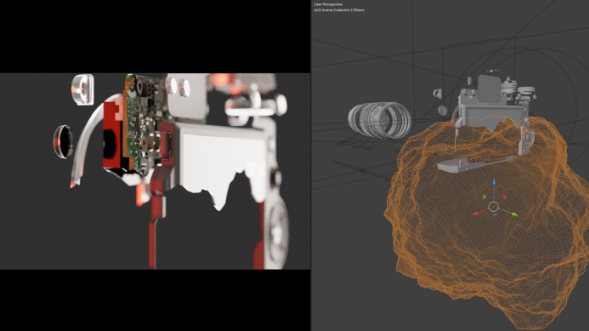
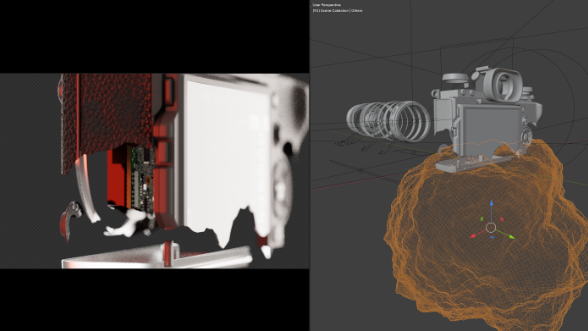
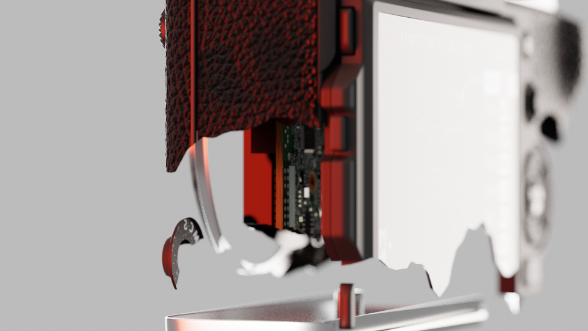
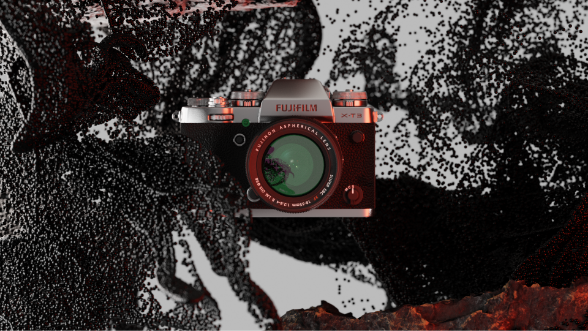
Particles and abstract surfaces visually represent the camera forming from raw elements, creating a sense of anticipation before the product fully appears.
This creates:
• Anticipation
• Energy
• A cinematic introduction
Material formation sequence built in Blender to simulate product creation.
Phase 2
Camera Assembly
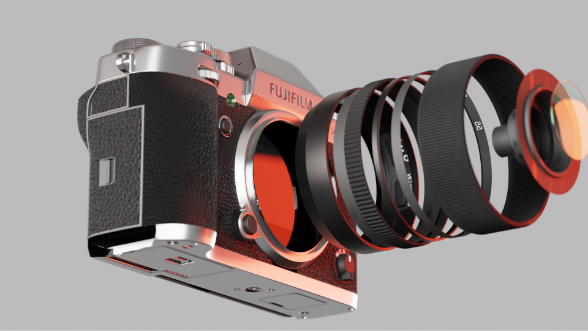
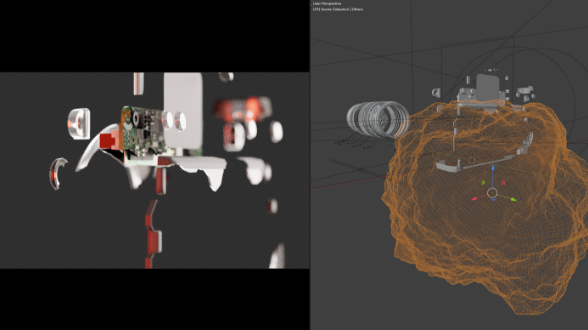
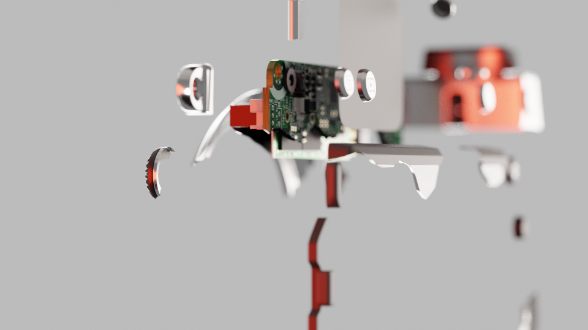
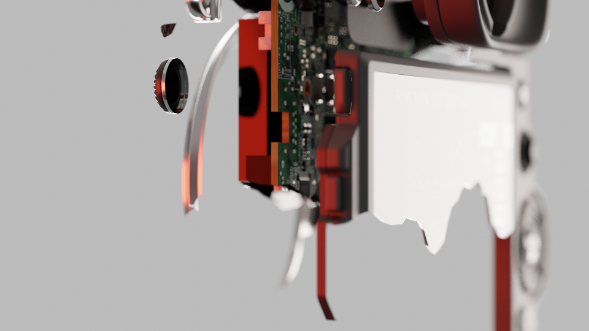
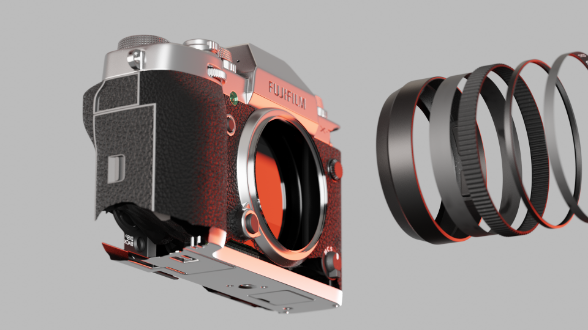
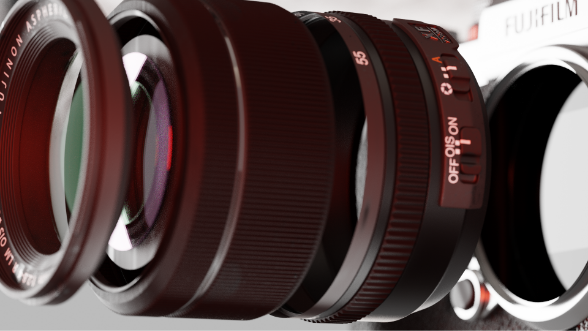
After the materials form, the camera gradually assembles through a controlled exploded-view sequence, revealing the internal structure and engineering behind the product.
This highlights:
• Internal structure
• Lens system
• Engineering depth
• Precision design
Assembly sequence designed to show engineering without technical overload.
Phase 3
USP Feature Presentation
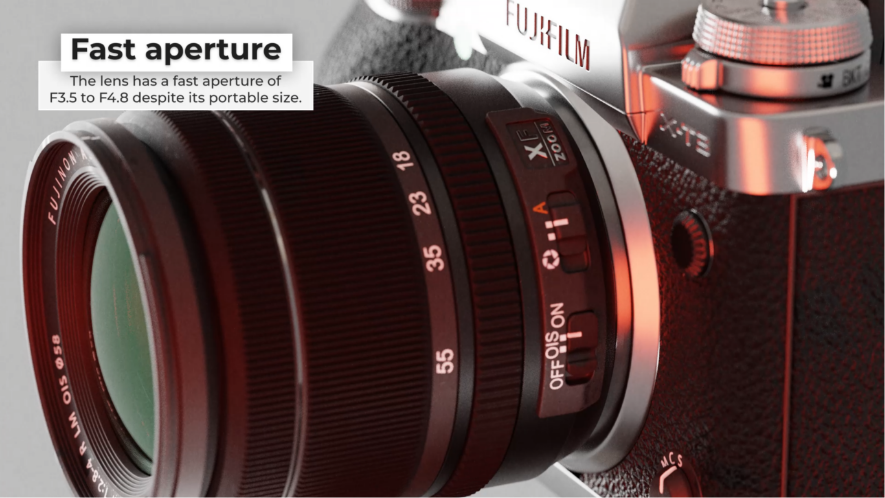
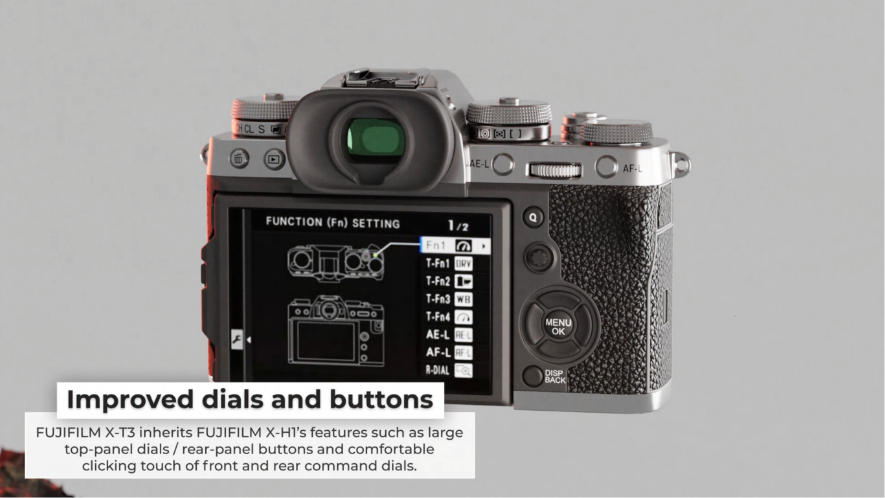
Once the camera is fully assembled, it is presented from multiple cinematic angles with clean USP graphics that highlight key features and product usability.
This section focuses on:
• Product usability
• Key features
• Brand identity
• Marketing clarity
USP visuals designed for launch and promotional use.
Final Reveal
Final Reveal
Particle Finish
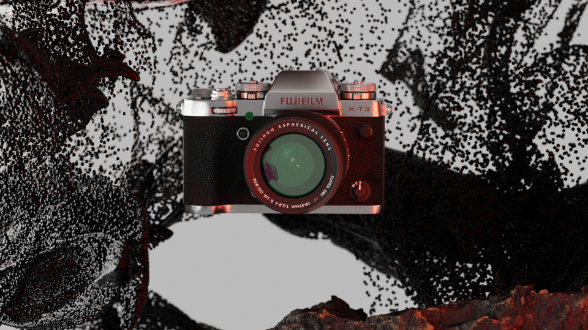
Floating particles move around the camera to create depth and motion. At the same time, their chaotic movement adds energy to the scene. As a result, the product feels more dynamic while remaining the clear focal point.
This creates:
• Visual impact
• A strong closing moment
• Brand presence
Final cinematic reveal with particle simulation.
Texture & Surface Details
Subtle Imperfections for Realism
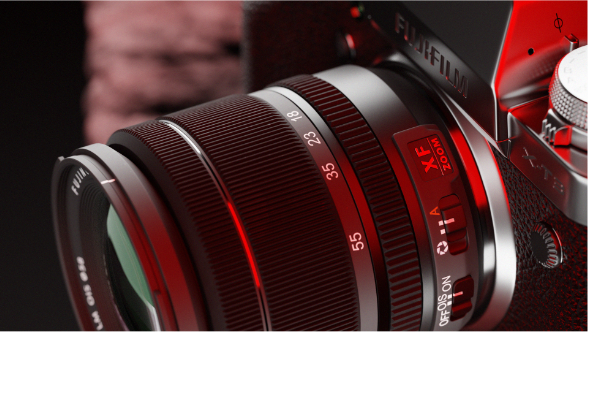
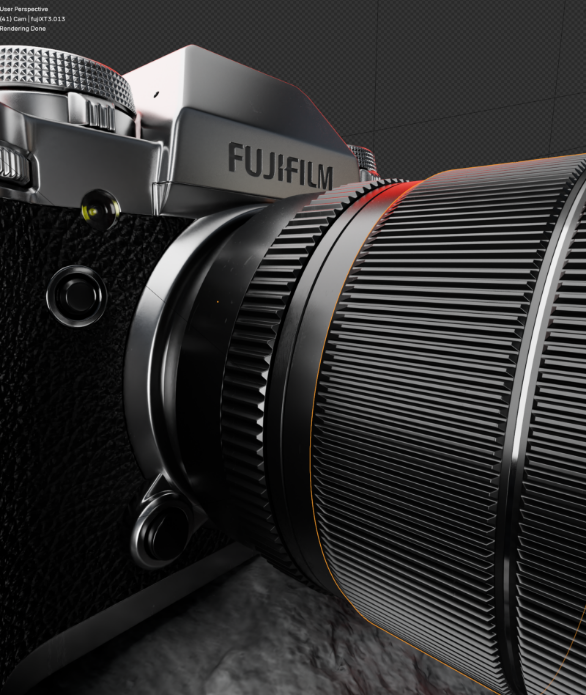
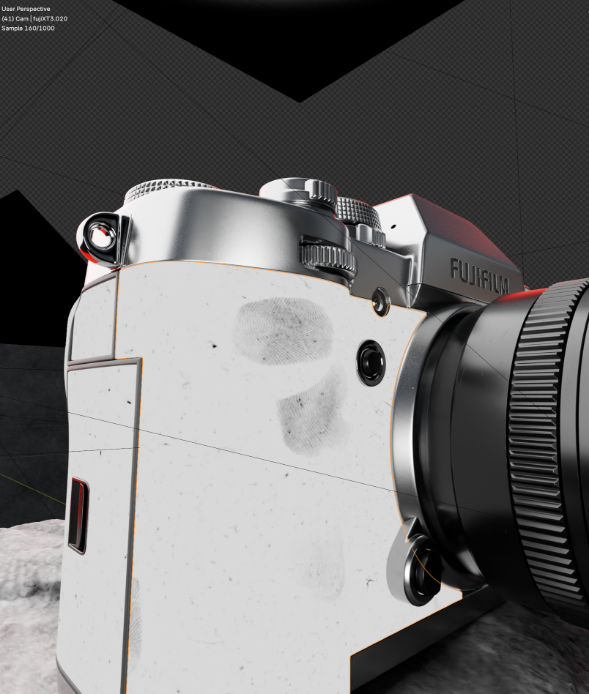
To avoid a plastic or artificial look, subtle imperfections were added:
• Fingerprints on the leather grip
• Light smudges on the lens barrel
• Micro surface roughness on metal
These subtle imperfections help the product feel real, tactile, and physically believable.
Subtle imperfections added for realism and authenticity.
Outcome
Outcome
This project demonstrates how cinematic 3D visuals can:
• Elevate product perception
• Communicate build quality
• Support product launches
• Replace traditional photography
The final assets are suitable for:
• Marketing campaigns
• Website hero content
• Social media
• Product storytelling
3D Video
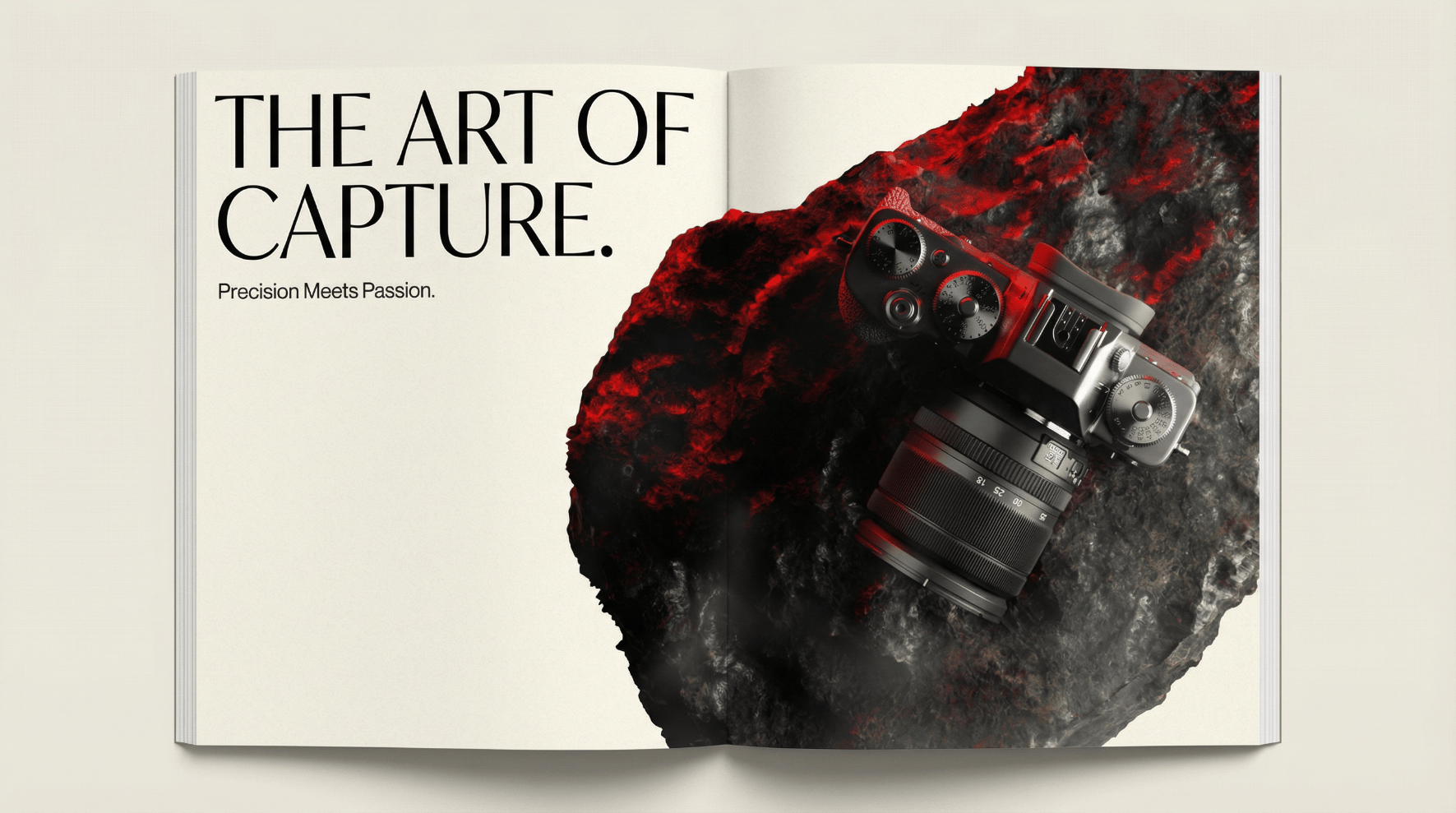
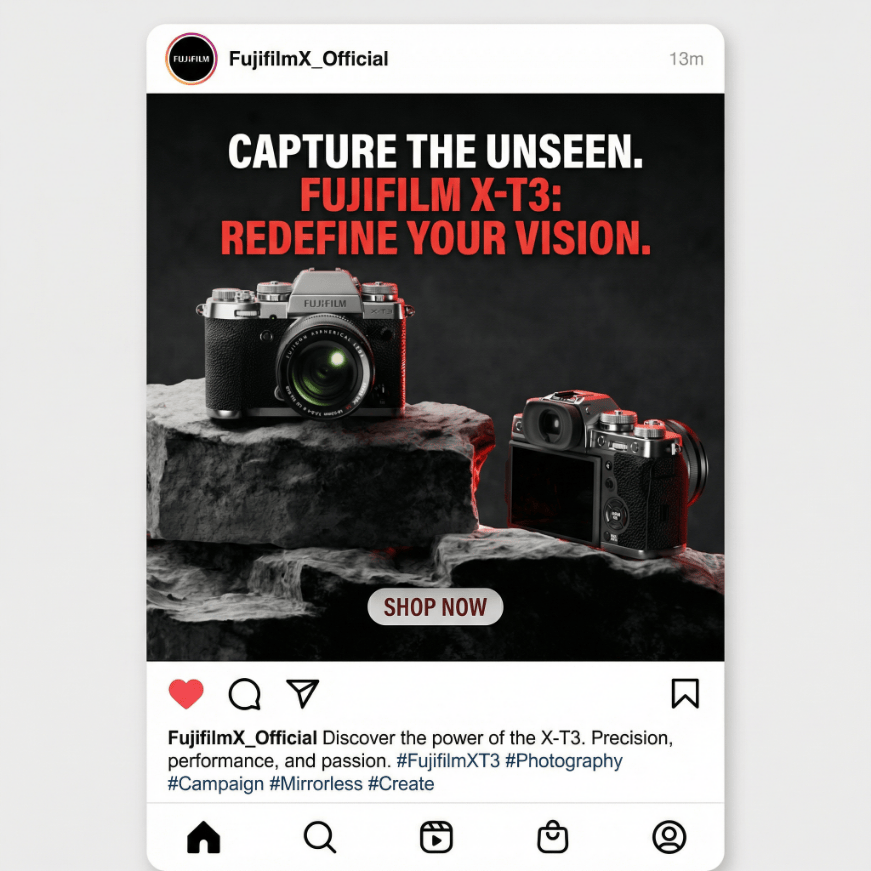
Social Media & Print Applications
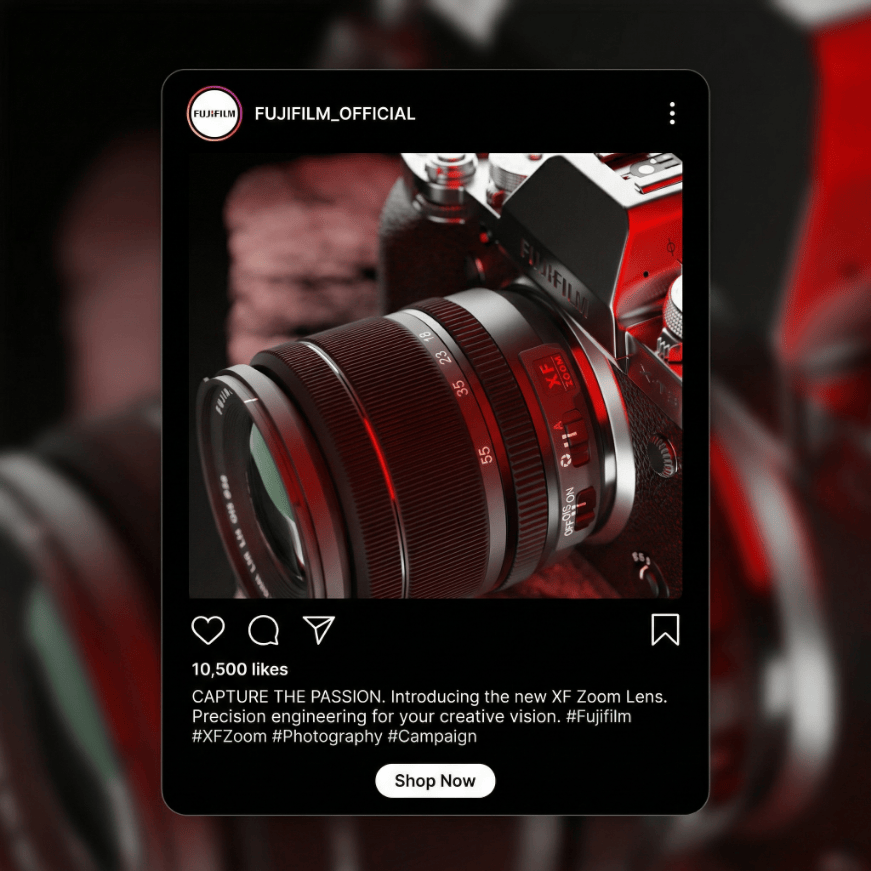
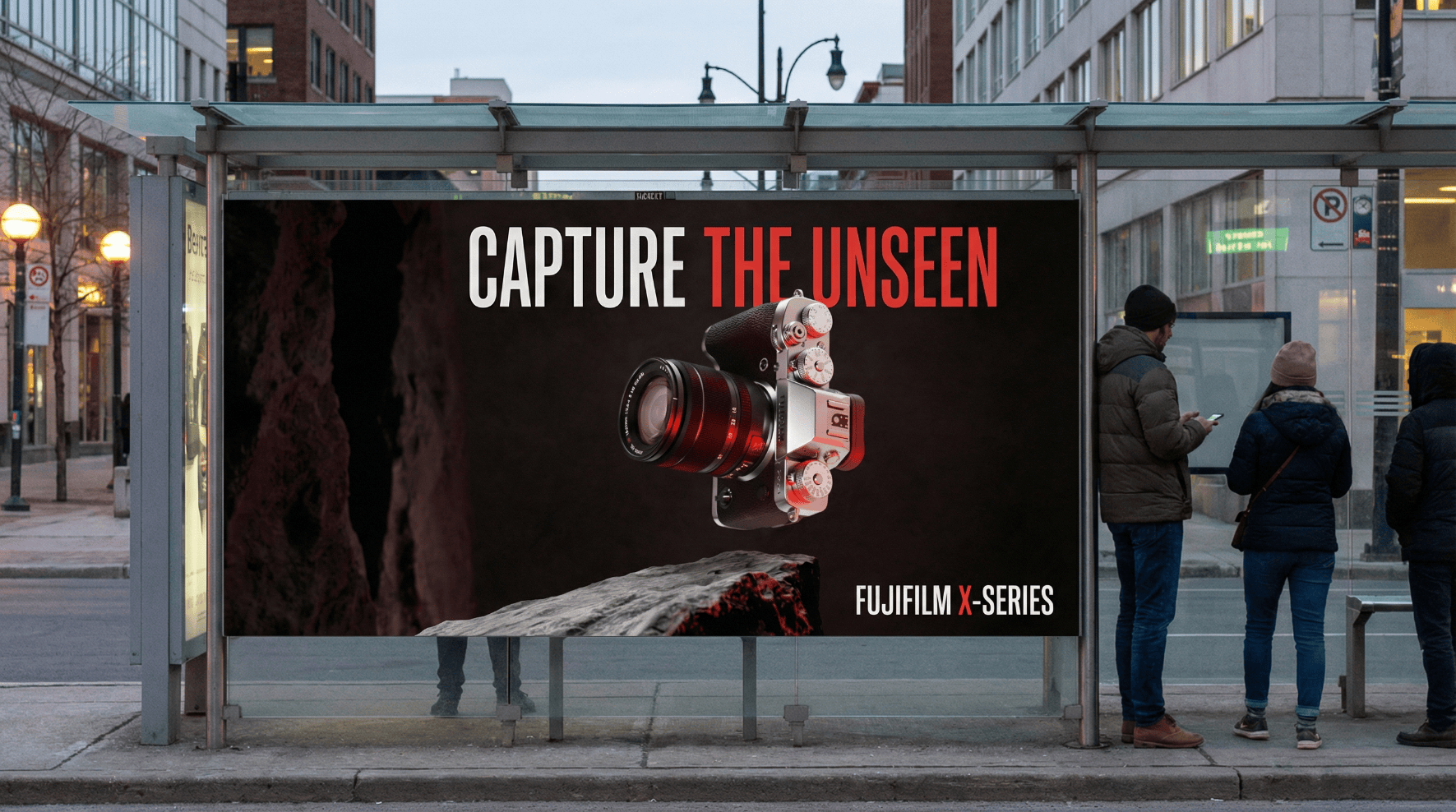
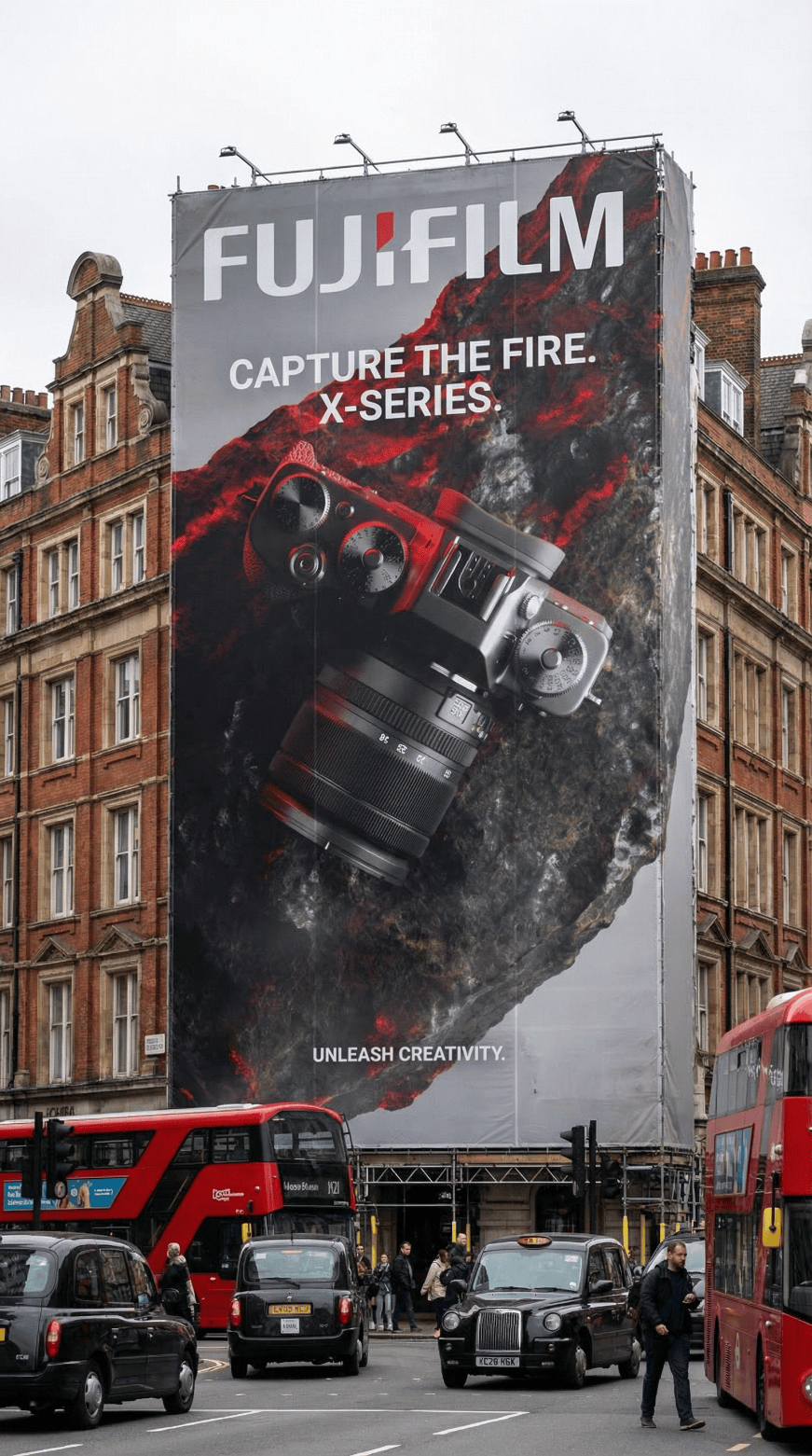
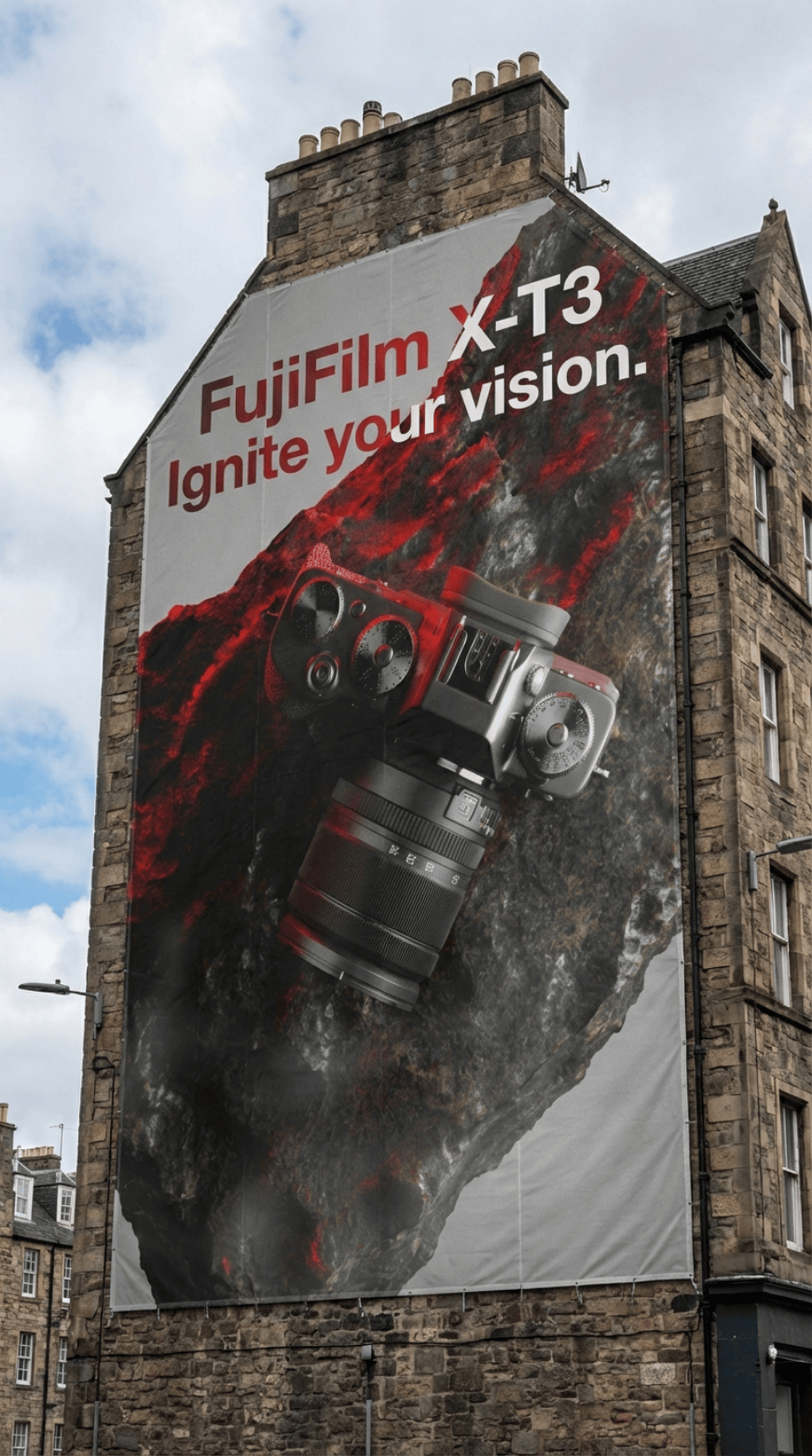
The final renders were designed to function as real marketing assets rather than simple portfolio visuals.
They were adapted for:
• Social media posts
• Magazine layouts
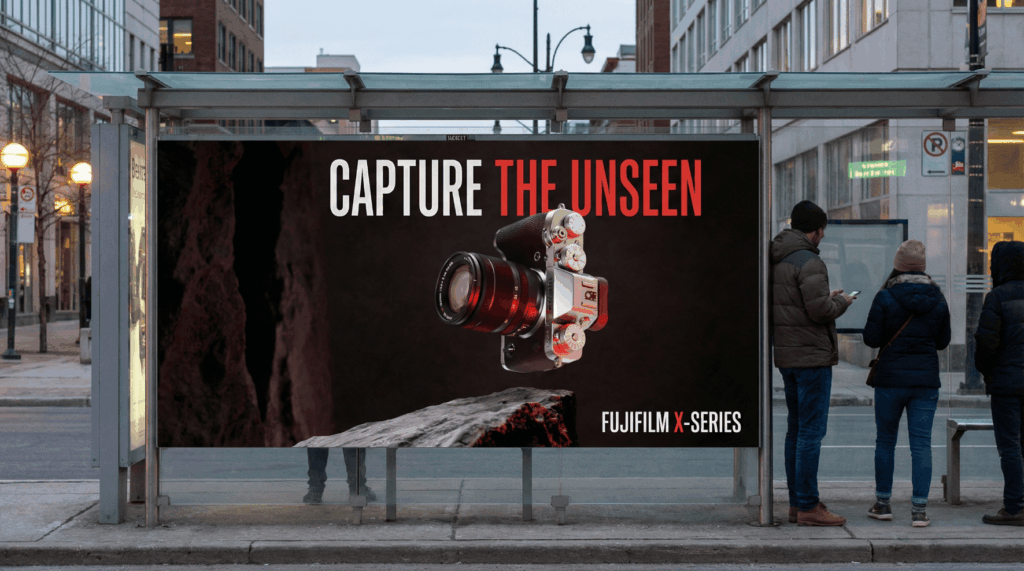
• Outdoor advertising
• Large-scale banners and bus stop displays
Each image was composed for strong readability, high contrast, and premium presentation across digital and physical formats.
Use these images here:
• Instagram-style mockups
• Magazine or editorial mockups
• Bus stop or billboard mockups
Reflection
Lighting, texturing, and camera movement played a major role in shaping the cinematic look and overall visual impact.
If you’re launching a premium product and want visuals that elevate perception and drive attention, let’s connect.
The goal of this project was to explore how 3D product visualization can elevate product storytelling. Instead of placing the camera in a traditional studio setup, I built a rough environment to create stronger contrast with the product. Additionally, cinematic red lighting was introduced to guide the viewer’s attention and emphasize the design details. As a result, the final render feels more dynamic and atmospheric while still highlighting the camera itself.
Role:
3D Artist
Art Direction
Tools Used: Blender 3D, Cycles, Manta flow particle simulation
Case studies
Hublot Big Bang
Ooni Pizza Ovens